
Avallon: a hand-painted brush colour font for textured display type
Design style
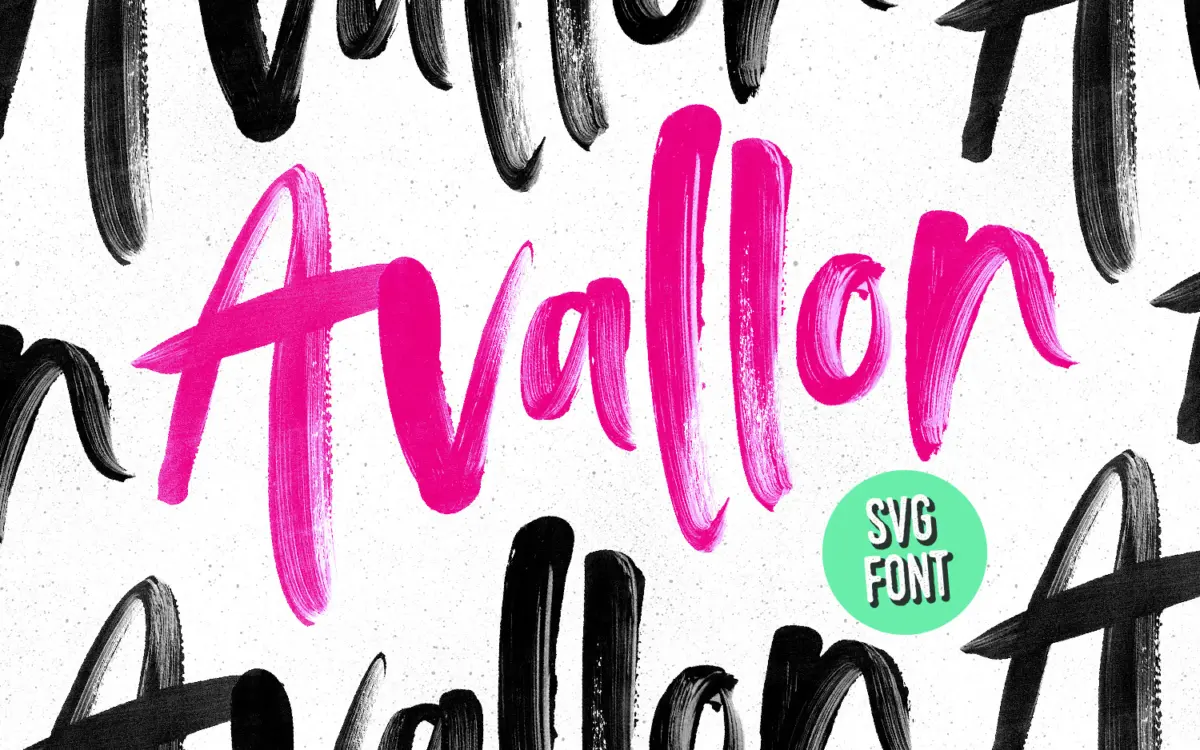
Avallon is a brush script built from actual painted strokes rather than vector outlines. Sam Parrett has scanned high-resolution brushwork and mapped it into an OpenType-SVG font, so each letter carries the ragged edges, bristle marks and ink pooling of a real brush rather than a smoothed digital approximation of one. The result reads less like a font and more like lettering that happens to be typeable. The strokes are confident and loose, with the kind of variable pressure you get from a loaded brush dragged fast across paper.
Because the texture is baked into the glyph rather than applied afterwards as a filter, the letterforms have a physicality that vector brush scripts usually fake with noise textures or distressed strokes. Here the grain is the drawing. That gives Avallon a handmade, slightly imperfect character that suits informal, playful branding rather than anything that needs to look controlled or corporate.
Character set and features
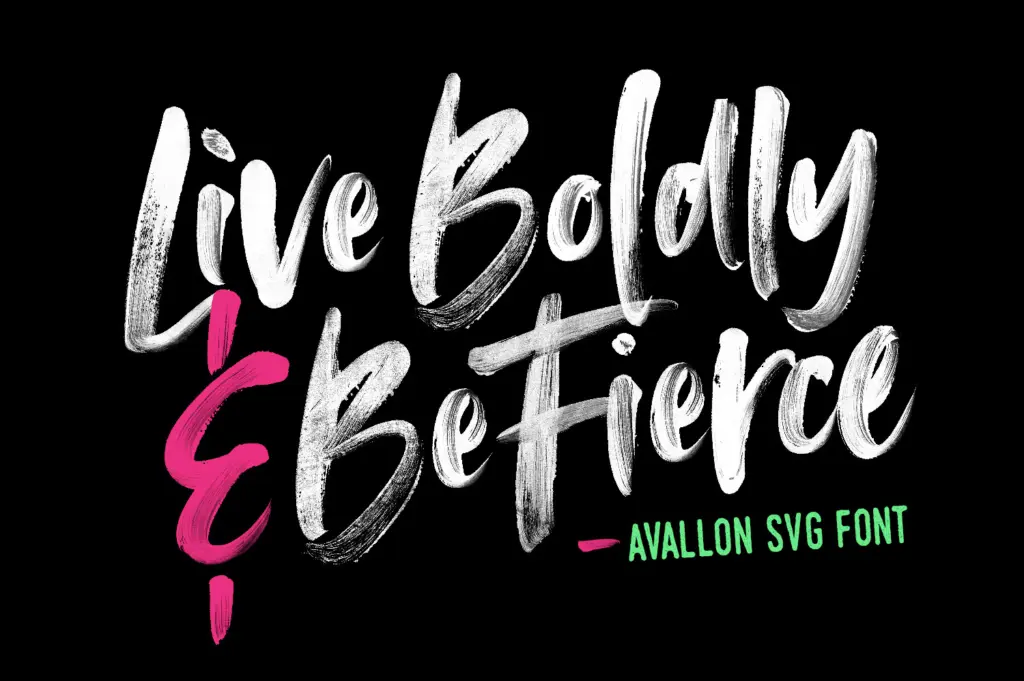
The package includes upper and lowercase letters at a drawn height of roughly 800 pixels, plus a second complete lowercase set under the Avallon Alt name, giving you two distinct textures to alternate between within a single word — useful for breaking up repeated letters so a piece of type doesn’t look stamped from the same mould twice. Because it’s built as OpenType-SVG, the colour and texture are locked into the glyph itself, but you can still recolour the whole font as one flat swatch or drop it over patterned artwork and let the transparent brush texture show through the background. That transparency is really the headline feature: it behaves like a proper paintbrush layer, not a coloured shape sitting on top of your art.
The trade-off is format support. OpenType-SVG needs recent Photoshop or Illustrator to render properly, and a lot of everyday software — older design tools, most web browsers, many packaging and print workflows — either ignores the colour data or falls back to a plain outline. A standard TTF is included for those situations, but it’s worth being clear-eyed that you lose the entire point of the font, the texture, the moment you’re outside a compatible app. This isn’t a font you can drop into any document and expect the brushwork to survive.
Use cases
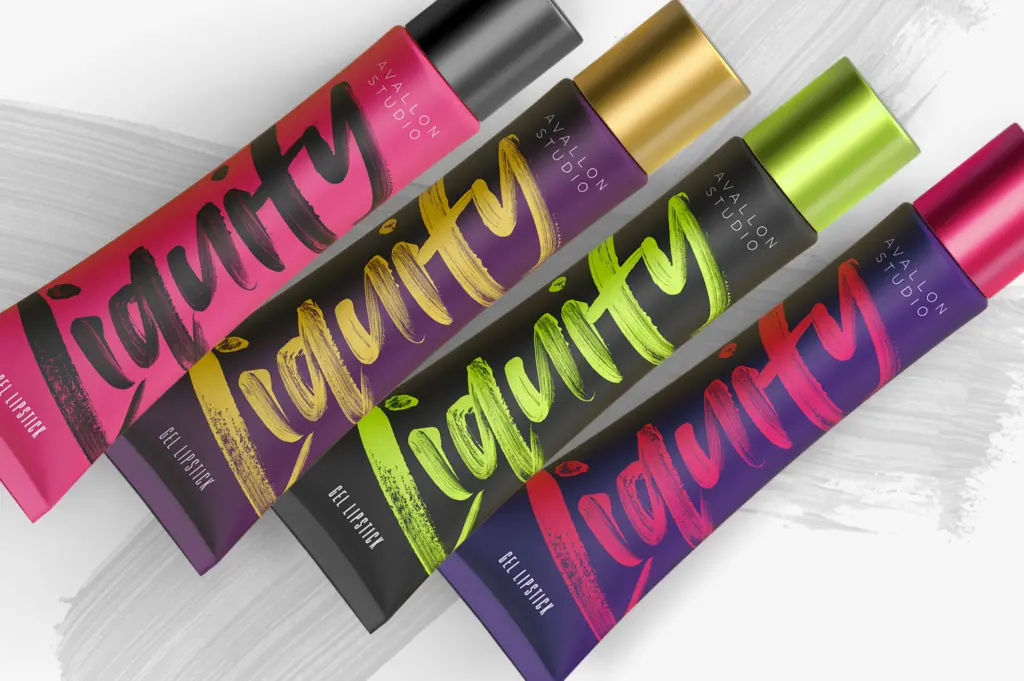
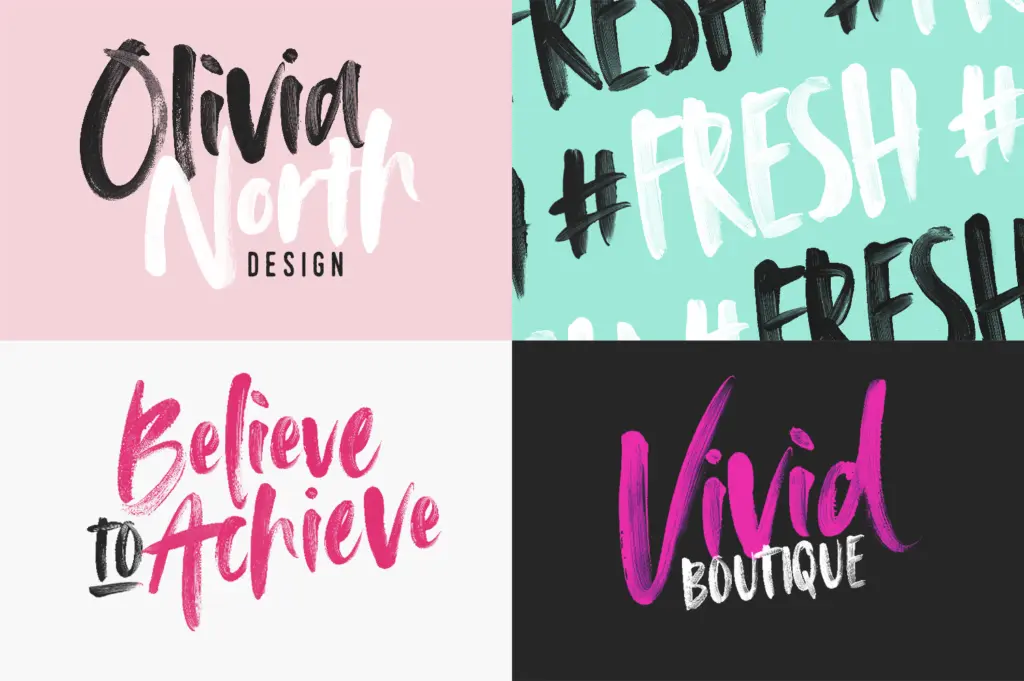
Avallon suits short, high-impact type: logotypes, badge lettering, packaging call-outs, social graphics, anything where a handful of characters get to be looked at closely and the texture can do its work. It’s not built for paragraphs or long headlines — brush faces like this lose legibility fast at small sizes or in dense settings, and the painterly noise that reads as character at 200 pixels turns to mush at 12. Think single words on a label, a hand-lettered feel for a wordmark, a textured hero word on a poster, rather than body copy or long display lines. Designers working in food and drink packaging, craft branding, or playful editorial layouts where a raw, brushed mark is wanted will get the most out of it, provided their production pipeline can actually carry the SVG data through to the final file.
What we liked, and what we didn’t
Strengths
- Real scanned brush texture gives the glyphs a tactile, un-faked quality
- Second alternate lowercase set helps avoid repeated-letter monotony
- Transparent SVG texture reads correctly over colour and pattern backgrounds
Trade-offs
- OpenType-SVG colour data only renders in recent Photoshop or Illustrator, falling back to a plain TTF elsewhere
- Heavy brush texture limits legibility at small sizes and in longer text settings
Avallon delivers genuine painted texture rather than a faked brush effect, and the alternate lowercase set is a smart addition for breaking up repetition. It's strictly a short-word, display-only tool, and its signature feature disappears outside a handful of compatible apps.
Verdict

Tantype reviews typefaces in depth — every font is tested in real branding, editorial and screen layouts before a word gets written. 555+ fonts reviewed and counting.